

Decades ago, the difference between middle grade and young adult literature had little formalization. Now, though, the categories are getting more specific all the time. That’s thanks partly to a societal push for books tailored to kids’ exact developmental levels, but the structure of the retail landscape also plays a part. Stores shelve kids’ books in age categories, so they need publishers to label them accordingly. That means editors and agents are looking for manuscripts that can be marketed to one specific slice of the school-age population. And authors, in turn, need to know how to deliver that.
So, what is the difference between middle grade and young adult? Middle grade novels, which are written for ages 8–12, tend to be shorter, more optimistic, and written with clear (but not unsophisticated) simplicity. YA novels, written for ages 12+, can be grittier, more introspective, and sometimes more complex. The chart below provides a quick at-a-glance comparison of twelve different features, and in the rest of the post we’ll dig deeper into each of them.
Quick-Reference Comparison between Middle Grade and Young Adult
| Middle Grade | Young Adult | |
| Target Audience | Ages 8–12 or 9–12 for classic middle grade; 10–14 for upper middle grade; 7–10 for lower middle grade | Ages 12+ for classic YA; 14+ for grittier books |
| Usual age of protagonist at outset | 10–13 | 14–16 |
| Narration | Usually a third-person point of view | Might use a first-person or third-person point of view |
| Word Count | 30,000–50,000 (SFF may be slightly longer) | 50,0000–80,000 (SFF may be slightly longer) |
| Major arc | “I’m learning truths about the world, and I will work with my loved ones to solve the injustices that are in front of me. I am figuring out what I am, what my relationship is to my immediate world, and what I am capable of.” | “I must figure out who I am so I can find my place within the world. This requires some fundamental shifts in things that used to seem rock solid, like my own identity and the ways I view my loved ones.” |
| Relationships | Moving away from full dependence on the nuclear family and toward a support network of friends. First crushes may be explored but are not usually central to the plot. | Navigating changes in existing friend and family relationships when romance comes on the scene, or when the character’s self-discovery necessitates changes in those relationships |
| Grittiness | Serious issues are explored, possibly with more depth than for any other audience, especially in terms of the impact they have on society writ large, and certainly on vulnerable sectors of the population. However, graphic descriptions and language are absent, and care is taken not to cause harm to the reader. By the end of the book, the characters have made concrete steps toward combatting these issues. | Graphic descriptions and language may be present; however, unlike in many adult novels, they are only included to serve specific purposes in the plot, not for general flavour. Certainly no eroticism. Generally, YA for ages 12+ does not include swear words. YA for ages 14+ may, although sparingly. Note that including swears will reduce support from the institutional market (schools, libraries). |
| Identity | People of many identities (gender expression, family structure, etc.) may be acknowledged to exist. Main characters may be exploring aspects of their own identity that are not tied specifically to sexuality (e.g., gender expression, culture, etc.). | Main characters are likely to be exploring their own identity, including sexual identity. |
| Mental Health | Mental health issues may be explored, but the author should take responsibility for not causing any harm to readers in that exploration. | Mental health issues are sometimes central to the plot and are likely to be explored in great depth. |
| The protagonist’s voice | The middle grade protagonist observes the world around them, seeks to understand it, and reacts to it without extensive introspection. They may make impulsive decisions driven by emotion. | The YA protagonist has an extensive inner world and thinks hard about how they feel about things, usually before they act. They might grapple with many possible responses to difficult situations and questions. |
| Mood | Optimism and determination, even in the face of great danger, trouble, or tragedy | Often bittersweet as the protagonist finds that growing into themselves means that some things must end |
| Writing style | Clean and accessible | May be more complex |
Navigate this post: Jump to any of the following topics:
How Old is Middle Grade? How Old is YA?
People are often confused about these age categories. In particular, they wonder if “middle grade” is equivalent to “middle school”, but the category is broader than that. Classically, the age of middle grade readers spans from age 8 to age 12, roughly grades 3 through 7. The readership of young adult books is usually defined as 12+, or grades 7+. So many middle-school readers will, in fact, be reading young adult books. What’s going on with that?
The fact is that most kids like to “read up.” That is, they prefer to read about children who are slightly older than themselves. A fourth grader devouring the adventures of a sixth grader will be excited to think of themselves in that character’s shoes one day, but a child in the seventh grade reading about that same eleven-year-old will already consider them to be a bit babyish, especially in the contemporary fiction genre.
Although specialized categories for middle grade and young adult readers have only existed for a few decades, their broadness is already prompting further refinement. We’ll delve deeper into the subdivision of middle grade in a future blog post, but for now, here is a quick overview:
Early Middle Grade

These books for kids aged 7–10 fill the gap between illustration-heavy early chapter books and word-heavy middle grade novels. Protagonists are likely 8–11 years old. This is an emerging category that isn’t named often (yet!). In the last decade, most books created explicitly for this audience have been graphic novels, but more typical novels for this age range are beginning to appear as well. Examples include Ways to Make Sunshine by Renée Watson, the Ada Lace books, and the Geronimo Stilton series.
Middle Grade
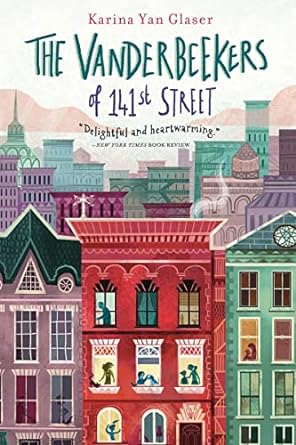
Middle grade books are typically marketed to kids aged 8–12, although 9–12 is also common for books featuring violence or heavy themes. Protagonists may be as young as 10, but it’s more common for them to be at least 12, which gives them more opportunity for relative independence. Examples include Macy McMillan and the Rainbow Goddess by Shari Green, Music for Tigers by Michelle Kadarusman, and The Vanderbeekers of 141st Street by Karina Yan Glaser.
Upper Middle Grade
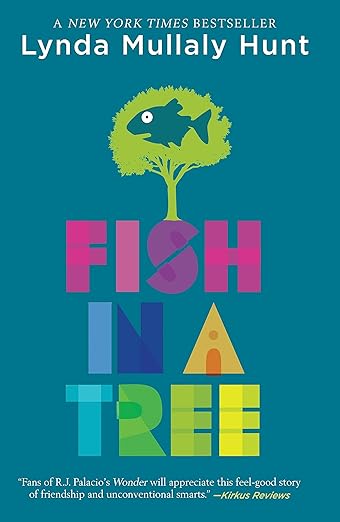
This category has been on the rise since the late 2010s, serving kids who are ready for more sophisticated books than they find in classic middle grade, but who aren’t yet interested in the themes and preoccupations of young adult books (or whose guardians don’t want them encountering the more mature content they may find there). The target readership is usually defined as ages 10–14, and protagonists tend to be in their early teens. Examples include Dragonfly Song by Wendy Orr and Fish in a Tree by Lynda Mullaly Hunt.
Young Adult

Classically, young adult books are marketed for audiences aged 12+ or 12–18. While some “young adult” books of the past (books that were written before clear distinctions were drawn between YA and middle grade) have child protagonists, in modern YA we’re more likely to see characters in their teens who can independently navigate their world. Or, as in Akata Witch by Nnedi Okorafor, a character may be 12 years old at the beginning of a series that spans several years.
If the story’s setting is outside of modern real-world society, and if it isn’t a school story, the character is likely to have adult or near-adult status that lets them make their own decisions without direct supervision.

Increasingly, some young-adult books are being published for ages 14+, or 14–18 (fun fact: the reason for adding “–18” is that the metadata systems that get information about books from the publisher to retail websites require a closed range). At this time, a distinct label hasn’t solidified for these books, but they tend to cover grittier subject matter, such as child sacrifice in Erin Bow’s The Scorpion Rules, and are more likely to include some swear words. Since by age 14 readers are much less likely to have their book choices filtered through an adult gatekeeper, these books can be marketed entirely to teens instead of to parents, teachers, and librarians.
New Adult
This category falls outside the purview of this post, but it’s included here to dispel any confusion. This label has recently been coined for books that target adult readers who still enjoy the fast pace, accessible writing, and optimistic feel of young-adult books, but who crave more adult themes and language.
What Story Characteristics Make a Novel YA or Middle Grade?
While the differences in word count and character age are important markers for YA and middle grade, many aspiring authors have the unsettling experience of following those guidelines perfectly and still ending up with, apparently, the wrong kind of book. Their short manuscript about a twelve-year-old is rejected by an agent who says it’s really a YA story, or an editor tells them their 60,000-word teenage adventure is more suitable for middle grade. How can that be?
The heart of the difference between YA and middle grade is not really the length of the book or the characters’ ages, although publishers do care about those things. It’s the narrator’s voice, the protagonist’s preoccupations, and the type of emotional arc they’ve been set on.
Narration and Voice

The narration of a middle grade novel is most commonly in the third person. If there are multiple protagonists, it may be an omniscient third-person narrator with their own personality, as in dark-but-wryly-funny collections like A Series of Unfortunate Events by Lemony Snicket. For a different mood, it can also be a more discreet omniscient narrator as in The Penderwicks books by Jeanne Birdsall. Most commonly, we find a single protagonist whose thoughts and experiences are relayed to us by a limited third-person narrator who only knows what the protagonist knows. First-person narration is in the minority for this age group, but it does exist, especially when the protagonist has a strong personality and a distinct voice, as in Jodi Carmichael’s The U-nique Lou Fox.
Regardless of the narrative point of view, the voice of the writing is always clear and easy to follow. The range of reading ability is particularly wide in middle grade, with some children just beginning to read fluently on their own while others zip through books with ease. Middle grade authors cater to both by keeping the energy of the writing high and the complexity of the sentences low. Word choice might also be considered, but most readers this age will be able to absorb new vocabulary through context cues.
Young adult novels may also use third-person narration, but, since their readership isn’t much interested in hearing from an intrusive adult voice, they are unlikely to use a Lemony Snicket-style omniscient commentator. Where multiple protagonists’ perspectives are given, they may be separated into their own chapters that each use a limited or close third-person point of view, rather than a more impersonal omniscient narrator that bounces between them in every scene. This approach allows the reader to sink into each character’s point of view and identify more fully with them. This kind of intimacy with the protagonist’s thoughts, feelings, and experiences is important in YA, so first-person narration becomes common at this stage.

While YA writing doesn’t get as convoluted as some adult literary fiction, it does bring in more complexity than middle grade. Sophisticated red herrings and misdirection can be used to great effect, as well as a certain amount of unreliability from a narrator—although authors should take care not to be so unreliable that the reader feels cheated when they discover that the relationship they felt they had with this character was a lie. Unfamiliar vocabulary from real or invented languages may be integrated, and many plot threads can be maintained at once.
Character Arc
In general, middle-grade characters will be doers rather than thinkers: events happen, and they react to them. They don’t spend pages wrestling with internal questions about the right course of action. Their arc takes them from a state of ignorance about the world to a state of seeing its truth—and actively doing something to affect it, in partnership with their friends and loved ones. They are coming into their own and learning what their abilities are. Adult mentors often play an important role, but the solution to the book’s problem is ultimately child led.
Young-adult books, in contrast, tend to contain plenty of introspection. Their protagonists are preoccupied with their own selfhood, so time is devoted to exploring their inner world and analyzing their identity. The choices they make carry significant consequences for them and others, and their problems are unlikely to have a perfect solution. Something is always lost along the way, whether it’s a previous version of a relationship, a less uncomfortable view of the self, or a more innocent understanding of the world.
Relationships
Middle grade characters, like their readers, are at a stage in childhood during which their awareness of the world has begun to broaden dramatically. Their circle of support is widening from their family and educators to a more complex network of friends and neighbours, and they increasingly value solving their own problems without adult input.
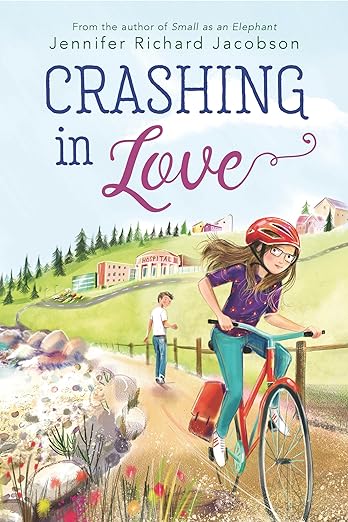
Older middle grade characters may be curious about romance, but since readers tend to be a few years younger than the characters and are often resistant to “mushy stuff”, it is rarely the lone central pillar of a book. That is, other plots involving friends, school, family changes, or other interests will usually command at least as much attention. An exception may be a book exploring puberty and first crushes. Physical actions won’t go past a chaste kiss.
In young adult books, characters are once again experiencing changes in their relationships. In their case, the way they relate to their family and friends inevitably alters once they embark on a journey of self-discovery or enter a new romance.
Romance is, of course, a prominent aspect of YA books in general, although there is increasing recognition in the industry that not every book for teens needs to feature it. For those that do, the book will often be very descriptive of the emotions and physical feelings associated with thinking about, seeing, touching, and kissing the love interest. It will usually stop short of including sexual intercourse, or, if a sex scene does occur, it will “fade to black” rather than describe it.
Themes and Mood
Middle grade readers care deeply about fairness, and they worry about injustice. They identify with underdogs and root for them, even if their own life experiences are quite different than the character’s. Because of this, middle grade books can tackle extremely serious issues, including war, poverty, family dysfunction, grief, and environmental crisis. Kids in this age group are hungry for books that tell them true things about the world and give them credit for being able to handle them. Importantly, however, the books usually convey a sense of movement toward rightness and justice. Even in the direst circumstances, some sense of optimism shines though, even if it is just the knowledge that certain important characters are striving for a better world. The author must also take care that their exploration of weighty topics does not cause harm to their young readers.

Young adult books also delve into a wide range of heavy issues, including some mental-health topics that are usually absent from middle grade, such as substance abuse, suicide, and self-harm. Where middle grade characters observe the wider impact of societal issues and look for answers, YA characters are more likely to grapple with how the issue affects them personally. Although matters are too nuanced for a sweeping solution in YA, the protagonist can undergo a personal journey that will lead to a better outcome. The result is bittersweet, since their journey—and growing up in general—requires that certain ways of being or of relating to others be lost along the way. Despite this, positivity remains in that most characters are shown to have good in them, and readers can expect an emotionally satisfying conclusion.
Format Differences in Middle Grade and Young Adult
Word Count
The word counts publishers typically seek for middle grade novels fall between 30,000 and 50,000 words, although lower middle grade novels may be between 15,000 and 30,000. Preferred YA word counts are usually between 50,000 and 80,000. In both cases, science fiction and fantasy can be longer.
You may notice that these word counts are shorter than those of some big-name books you’re familiar with. That’s because when publishers are acquiring a new, unproven author, they don’t want to take a chance on a longer book, which is more expensive to produce, print, and ship. Many readers will also choose shorter books when they’re trying someone new.
Typesetting
Interestingly, in spite of the different word counts, a middle grade book often looks to be the same size as a young adult book. Why is that? Because books for young people of different ages have distinct conventions in their typesetting. Not only will the size of the text itself (the “point size”) be larger for younger readers, but the amount of space between each line will also be greater. This is called the “leading,” a name that comes from the earliest days of printing when strips of lead were inserted between lines of type to keep the spacing even.

Illustrations and Paper Choice
If a middle grade book includes illustrations, it will probably also be printed on a more robust paper, in order to prevent show-through of the ink. This paper may be bulkier than that used in a text-only novel, although this isn’t always the case. However, if any short book doesn’t have enough presence to be easily seen when placed spine-out on a shelf (especially if it isn’t part of a series), a publisher may increase its spine width by choosing a type of paper that is bulkier and less dense.
Frequent illustrations are common in lower middle grade, where they take the pressure off readers who aren’t yet comfortable with large blocks of text. They may be used once or twice per chapter in classic middle grade, but this is more of an exception than a rule. You’re unlikely to find illustrations in upper middle grade or young adult, except in a deluxe edition. In all these cases, the illustrations represent the text directly, rather than building on it and conveying extra information like those in a picture book or early chapter book.
Cover Design


Cover designs in middle grade and YA also experience different trends. In graphic covers, a creative presentation of the title text forms the basis of the design. These can be found in both MG and YA, but the younger the audience, the more likely it is that some kind of concrete imagery will also be prominent.
Photographic and illustrative covers are both used in YA. After a period when young adult covers avoided depicting characters directly—either by featuring a symbolic object instead or by cropping out the faces of any human figures—YA character art has returned, particularly in books with a strong romantic component. Many make strong use of punchy graphic styles with limited colour palettes.

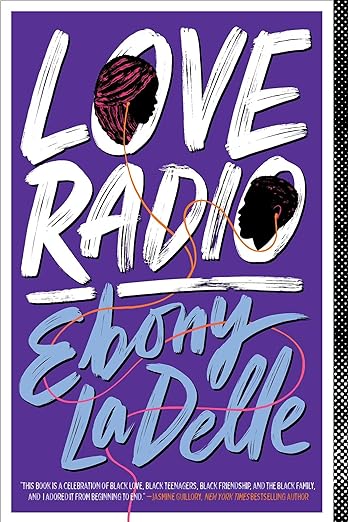
2022’s YA Love Radio by Ebony LaDelle moved to a graphic cover for its 2023 paperback release
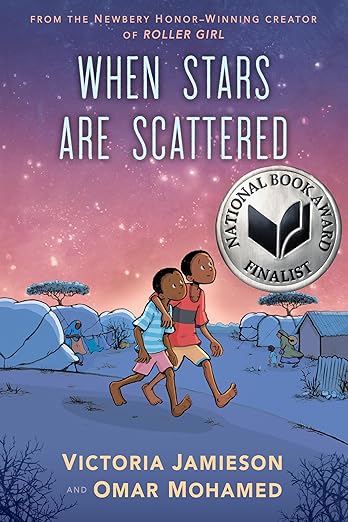
In middle grade fiction, photographic covers are rare. Complex illustrated cover art is much more likely for this age group than for YA, including specific depictions of characters and settings. When Stars are Scattered by Victoria Jamieson and Omar Mohamed, for instance, shows the two main characters in a literal representation of Dabaab, the refugee camp where they live.
Why Does the Middle Grade vs. Young Adult Question Matter?
As I mentioned at the beginning of this post, authors today are under increasing pressure to be conscious of age-category distinctions. Part of the reason is simply that parents and educators have more interest these days in guiding kids to books that are exactly suited for their developmental level. Another part is that, with the proliferation of other pastimes available to them, kids are less likely to stick with a book that is either too challenging or not stimulating enough.
Beyond that, the way books are sold now exerts a strong pressure toward categorization. Bookstores, especially large national and multi-national chains, have separate shelves for specific age groups. To choose the books that will go on those shelves, they require that publishers market each book to one of those age groups. If the publisher chooses an age range that doesn’t fit neatly into a retailer’s categories, it’s less likely to be stocked. That’s why “for all ages” is a marketing no-no. Online retailers, too, depend on books being sortable by age range. All this means that agents and editors seek out manuscripts that will fit neatly into one of the slots available.
Fortunately for us on the writing and editing side, being forced into narrow constraints has a positive effect on creativity. Besides that, it really is wonderful to be able to meet readers exactly where they are in terms of reading skills and emotional maturity. More than anything else, your book needs to know decisively what it is and who it’s for; if it’s secure in that, you can likely get away with breaking some of the rules I’ve laid out here.
Self-Edit Like a Pro: Three Powerful Steps to Perfect Your Manuscript.
Not sure if your manuscript has its identity sorted out? I have a free download to help you! It takes you through the most important big-picture questions I ask about every text I edit, including whether your book knows—really knows—who its audience is.
Happy writing!
Erin

 Erin Alladin
Leave a reply to How Do You Know if Your Fiction Book Idea is Good? – Erin Alladin Cancel reply