

Early in my career, I was a publicist for a publishing company. Now, as an author in my own right, the most effective promotion I do for my books requires no resources beyond a word processor and an internet connection. And it’s something that anyone can replicate.
This post is going live on the publication date of my picture book Wait Like a Seed. Since I’m in a celebratory mood, I’m going to take you through exactly what I did to get attention for its release from news media, podcasts, community groups, and conservation organizations. We’ll start with the press release I wrote for local news media, then look at how I adapted it for other organizations and how I sent it out.

Anatomy of The Press Release
Start with the date you’re sending the press release:
March 31, 2025
Add a statement about when the information can be made public:
FOR IMMEDIATE RELEASE
Write a headline, with a hook specific to the organization you’re sending it to. Here, “local” is key:
Local Author’s New Picture Book Teaches about Monarchs and Milkweed
Add a subheading with the most important information you’d like your reader to internalize about your book:
[Town] author wrote Wait Like a Seed to help kids connect with ecosystem life cycles.
If you have any major reviews of your book, you can include a brief quote:
“Of the many titles available on milkweeds and monarchs, this is one of the most accessible for youngsters reading on their own.”—Kirkus Reviews
A cover image is important, of course:
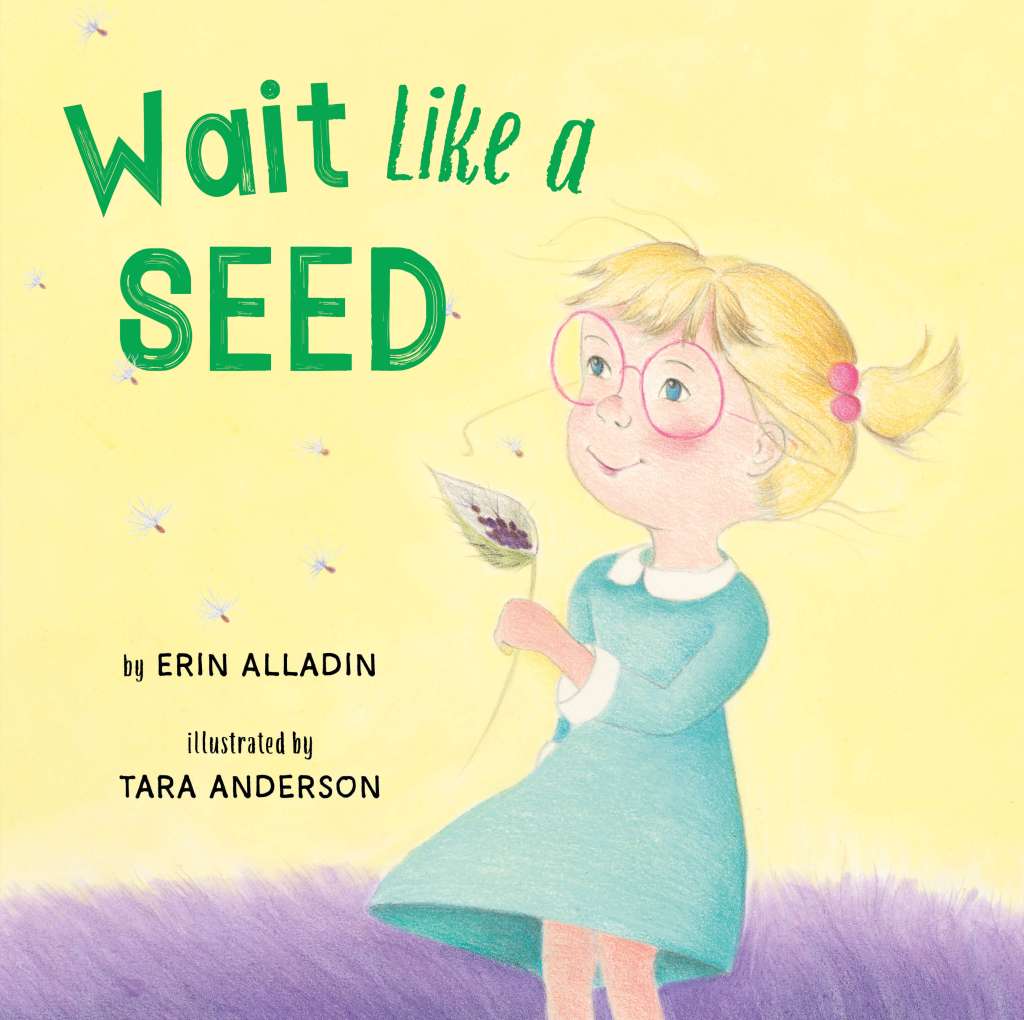
In your opening paragraph, make a case for the timeliness of your book and give whatever version of your identity you think your reader will care most about. For me, local media won’t care much that I’m a professional editor, but the fact that I co-host a gardening podcast adds weight to my authorship of this particular book.
In Wait Like a Seed, local author and gardening podcaster Erin Alladin merges a science lesson about how plants grow with a reflection on growing up and feeling connected to the life around us. The picture book’s focus on milkweed is timely in 2025, which the National Garden Bureau has declared the Year of the Asclepias (milkweed’s genus of plants).
The next paragraph is your main book description. You might be able to lift this from your publisher’s marketing copy, or you might write your own version to emphasize certain aspects of the book that will appeal to this audience. For news media, I included information about the conservation status of monarch butterflies.
Remember that some people who receive the press release will not contact you or seek out a copy of the book; they will simply reprint parts of the press release verbatim or restate them in their own words. So make sure this paragraph conveys exactly what you want people to know about the book.
Illustrated by Tara Anderson, Wait Like a Seed uses rhyming quatrains to narrate the life cycle of a flowering plant: Wait like a seed, / Cozy and small. / Wait like a seed / ‘Til the spring rains fall. In the illustrations, two young siblings watch the progress of common milkweed from seeds sprouting in the spring to plants releasing their own seeds in the fall. Meanwhile, monarch butterflies that lay their eggs on the milkweed’s leaves undergo their own transition from egg to caterpillar to chrysalis to adult. At the back of the book, nine full-colour pages of supporting material detail the stages of milkweed and monarch life cycles, fascinating facts about both, and the monarch butterfly’s remarkable migration cycle. It includes a glossary, selected readings, and a resource list for those who want to grow their own milkweed and support monarchs, which are a species of special concern in Ontario and are endangered elsewhere.
Add a statement that tells your reader where they can find out more. I’ve found that not all media remember to acknowledge books’ publishers these days, so I make a point of naming them here. If this media organization serves a region where you have an event planned, you can include information about that.
Wait Like a Seed is published by Pajama Press: https://pajamapress.ca/book/wait-like-a-seed/. A book launch is scheduled at Parry Sound Books from 11 am to 12 pm on May 10.
End with a biographical paragraph in third person. If you want to subtly promote anything else you’re doing, you can namedrop that here. Everyone from the media who interviewed me about Wait Like a Seed also asked about my podcast, which was exactly what I hoped for. Another important thing to include for local media is the name of any town(s) in the region where you have deep connections (born, raised, went to school, live now, etc.).
Erin Alladin is an author, editor, and presenter who is passionate about helping people reconnect with the ecosystems they live in. She’s the co-host of the gardening podcast Plants Always Win, which launched in 2024 to be a voice for home gardeners in Ontario. Born in [town] and raised in [town], Erin earned her BA in English from Nipissing University, then went on to work in the Canadian publishing industry for more than a decade. Today Erin works as a freelance writer and editor in [town].
At the bottom of the press release, list the specs for the book, including audience, publication date, page count, ISBN, price, and format.
Juvenile Nonfiction Ages 4–8
Publication Date: April 29, 2025
Ship date: April 4, 2025
32 Pages
ISBN: 978-177278-338-4
Price: $22.95 HC with dust jacket
End with a call to action appropriate to the organization you’re sending the press release to. For media, you ideally want them to contact you to request more information, a high-res cover image, or even an interview. Of course, if you’d rather automate all this, you can create a media kit and include the link here. But I like fostering direct contact.
If you’re traditionally published, the publicist responsible for your book might agree to have their name and contact information here instead of yours.
For further information or to request a cover image or book an interview with Erin, please contact: [contact information]
Adapting the Press Release
Regional News Media
For media that serves a broader geographical region, I simply changed the language in my subheading and opening paragraph from “local” and “[my specific town name]” to “Northern Ontario,” which matched the service area of the media I was targeting.
Educators
I wrote a new header that focused on the book itself and how it connects to my province’s curriculum:
New Picture Book Uses Monarchs and Milkweed to Teach the Life Cycle of Plants and Butterflies
For educators in my own province, I did include the province name in the subheading:
Ontario author writes to help kids connect with ecosystem life cycles.
Instead of the first-paragraph sentence about monarch butterflies’ conservation status, which is a downer, I acknowledged kids’ eco-anxiety and explained how this book might help:
It also offers a hopeful answer to recent dire headlines about butterfly decline: all of us can help plant or preserve butterfly habitat.
In the bio where I previously gave expanded information about my podcast, I instead highlighted my author visits:
She’s the co-host of the gardening podcast Plants Always Win and an enthusiastic presenter in elementary schools, where she brings nature-based education to students in indoor and outdoor classrooms.
I removed my prompt to request a cover image or interview, but after “For further information please contact” I added an extra link:
About Author Visits: https://erin-alladin.com/speaking/author-visits/
Specialist Publications
Magazines and other publications exist for all sorts of niche subjects, including butterflies and gardening. I used my educator press release for them, but changed the call to action to encourage them to request a review copy of the book:
For further information or to request a cover image or review copy, please contact:
Specialist Organizations
Whatever the contents of your book, you can likely connect it to some subject of special interest. And that special interest might have clubs, museums, associations, and more dedicated to it.
For Wait Like a Seed, conservation organizations with programming and education related to butterflies and their habitat was a natural fit. I used my educator press release and removed all location references outside of the bio:
Erin Alladin is an author, editor, and outdoor educator who is passionate about helping people reconnect with the ecosystems they live in. She’s the co-host of the gardening podcast Plants Always Win and an enthusiastic presenter in elementary schools, where she brings nature-based education to students in indoor and outdoor classrooms. Today Erin works as a freelance writer and editor in Northern Ontario.
Sending the Press Releases
When I started in publishing, it was normal to attach a press release to an email. Today, that will likely land it in the trash since people are more wary about what is coming into their inboxes. It’s a better practice to paste your text at the bottom of your email and use whatever formatting tools your email client has available to make it look nice. If you don’t have much in the way of formatting capabilities, use all caps for headers and make sure you have line spaces between your paragraphs.
You’ll be embedding your cover image directly into the email, so you want it to be small. You can use the website tinyjpg.com to compress your file.
Write a subject line that expresses a strong hook for their audience; I used “Helping Kids Nurture Monarch Habitat” for most conservation and education organizations.
Unless you want to acknowledge an existing relationship or connection with your recipient, you don’t need much preamble in your email; the information is all in the press release, and you don’t want to take up much of their time. You can say, “Below please find my press release for…”, insert your signature, and paste in the press release. Or, in some cases, you might use no preamble or signature at all. I did this whenever I found myself thinking, “Who do I even think I am, bothering this person?” Sending the press release alone made it all about a piece of news they might find relevant, and not about me being pushy. And I did get some return on this strategy.
The Results
In the few weeks leading up to my book’s publication date, my press release efforts landed me three local and regional media interviews (including one TV interview that aired on the 5:00 news), a 45-minute podcast interview, an author visit booking, inquiries from two major conservation organizations, and a review request from a specialty publication. That’s enough quick uptake to surprise even me! There’s a lot to be said for nailing the right hook at the right time for the right audience.
Even modest results from a press release campaign can have long-lasting effects. I’ve written before about an interview for my 2021 title Outside, You Notice that led to a story in my hometown paper. That story was seen by a community organization that purchased an Outside, You Notice story walk to install on a local bike path. That led to me doing an event with local school kids, and all the publicity is probably what led the school board to hire me for a tour of ten rural schools where the kids had never met an author before. Not bad for a humble press release!
Doing Your Own Press Release Campaign as an Author
I have a whole post to help you develop your press release mailing list, but here’s a shortened version:
- Identify audience sectors for your book. For me it was people in my region, schoolteachers, outdoor educators, and conservation organizations.
- Identify media and organizations with access to these audiences. Don’t stretch yourself too thin; just identify a short list of ideal choices in each sector.
- Search on their websites for appropriate contacts. Producers, hosts, editors, and programming coordinators are all great. Note that very large publications, like national newspapers, will expect you to research an appropriate reporter and reach out using their formula of, for example, firstnamelastname@bigcitypaper.ca.
- Have a high-res cover image and head shot ready to send to anyone who requests them.
- Start practicing your elevator pitch and talking points for any interviews you book!
Promoting your book? You might like these posts too:
How Not to Hate Marketing your book
30 Ways to Market Your Book Once It’s Published
Want professional help with your press release? Book a Focused Counselling Call and we’ll work on it together.

 Erin Alladin
Leave a comment