

Any story is worth telling if it brings you pleasure, but how do you know you can turn your idea into something that people will want to read, or that publishers will want to buy? To answer that, you need to consider your audience’s needs, the conventions of your genre, and the preoccupations of society today.
If you’d like to explore whether your nonfiction book idea is good, head to this post.
Do you know who your audience is?

No book is for everyone. An author who tries to write for everyone will end up writing for no one, because no one will feel the book is speaking directly to them. If you’re writing for young people, you need to be confident whether you’re targeting teens or middle grade readers. With adults, your audience might simply be defined by what they like most in a book:
- Readers of contemporary fiction who love the found-family trope
- Lovers of regency romance who are interested in historically accurate clothing and language
- Clive Cussler fans who also like Formula One racing
Even if you don’t work out any details of character and plot before you start writing, you must know who your reader is before you begin.
Does it scratch an itch for readers of this genre?
If you’ve already defined your audience by what they like to read, then you know the genre/subgenre you’re writing in. Your next job is to identify the tropes that your reader keeps coming back for in that genre, whether it’s contemporary fiction, regency romance, adventure, mystery, etc. Will your story idea deliver on enough of them to satisfy this reader? If you subvert some of their expectations, will that be a bad reading experience or an invigorating one?

Many writers feel pulled between two opposing goals, each one nearly impossible to achieve: either scramble on board a trend before it fizzles out or write something that no one has ever seen before. Fortunately, you don’t need to go to either of those extremes. Instead, you simply need innovate on the elements your audience already likes. Readers who enjoy Brian Jacques’ stories of woodland animals fighting to save their home might not make the leap to a book about a teen caught up in a fight for royal succession. On the other hand, a book about woodland animals embroiled in royal intrigue might get their attention.
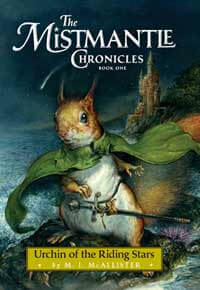
Once you have them hooked, make sure you reward them by delivering the same kind of reading experience they already enjoy. What is it Brian Jacques’ readers love about his Redwall series? They are coming-of-age stories with cozy atmospheres (in spite of frequent battles) and intimate worldbuilding. An author hoping to attract Jacques’ readers shouldn’t copy his formula exactly—that won’t satisfy anyone—but, at the same time, they have to offer more than just anthropomorphic animals. After all, you wouldn’t expect fans of the heartwarming Mariel of Redwall to feel the same attraction to George Orwell’s disturbing Animal Farm. The answer is to use anthropomorphic animals in a new setting and plot while revisiting some familiar character tropes and (this is key) providing the same emotional payoff: wholesome moments abound, good triumphs, and the hero grows up well.
If your book treads old ground, how will you make it new?
When your story makes use of old, familiar tropes, you can make them feel relevant by building in themes that strike a chord with current societal issues and moods, or by writing from a perspective that readers in that genre haven’t experienced before. Let’s look at some examples:
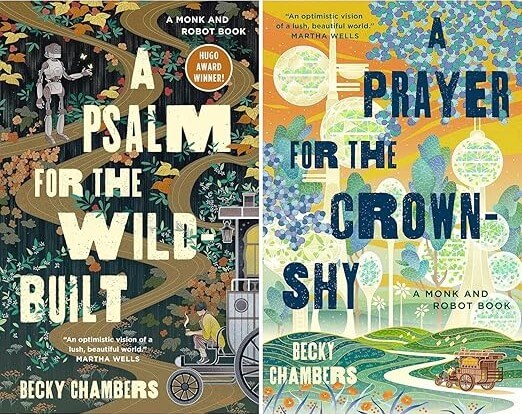
In her 2021 and 2022 Monk and Robot books, Becky Chambers revisits an old question of what would happen to humans if robots rose up against their programming—but, writing in a time of heightened eco-anxiety, she takes this new approach: what would happen if the emancipated robots chose to become one with nature?
Tomi Adeyemi’s Children of Blood and Bone is one of thousands of hero’s-journey stories in which a young person touches a magical object, discovers their own power awakening, and learns that they have been prophesied to carry out a major quest—but its West Africa-inspired worldbuilding swept the genre in 2018 as a refreshing departure from the Eurocentric fantasy tradition. Its treatment of minority oppression within a society was also highly relevant to real-world dialogue and events.

This leads us nicely into theme:
Will your themes resonate with a contemporary audience?
Some themes, like “love conquers all,” have staying power across centuries. Others, like “the civilizing influence of our great colonial power is a good thing,” would not be well received today.

Even if you prefer to let your book’s overarching message emerge organically as you write, you can still start by asking yourself what kind of themes might come up as you explore your story idea. A novel about a tech genius could present technology as the solution to all of humanity’s problems, or it could explore the social cost of rapid technological development. Thinking about where your target audience stands on issues like this will help you steer your book in a direction that satisfies them—or, if you prefer, that challenges their preconceptions.
Are you the right person to write this book?
If you want to write about lived experiences that you don’t have yourself, how will you handle that? Are you prepared to do research, consult with people, and, ideally, get feedback from an authenticity reader? When you write about real groups of people, you influence how your readers perceive them in the real world. Inventing things or perpetuating stereotypes causes real harm, so be prepared to treat this research seriously.
If this process worries you, here’s a little story: I was once involved in the edit of a book about a Deaf protagonist. The author had connections to the Deaf community but didn’t share her protagonist’s life experience directly, so an authenticity reader was hired. The reader gave some insights that didn’t just correct mistakes, but helped the author enhance the protagonist’s character development, which was highly rewarding. We don’t know what we don’t know, and finding out can be an enriching experience.
Not sure where to find the perspective you need? Try this database of freelancers from diverse communities.
Can you make an outline for it?
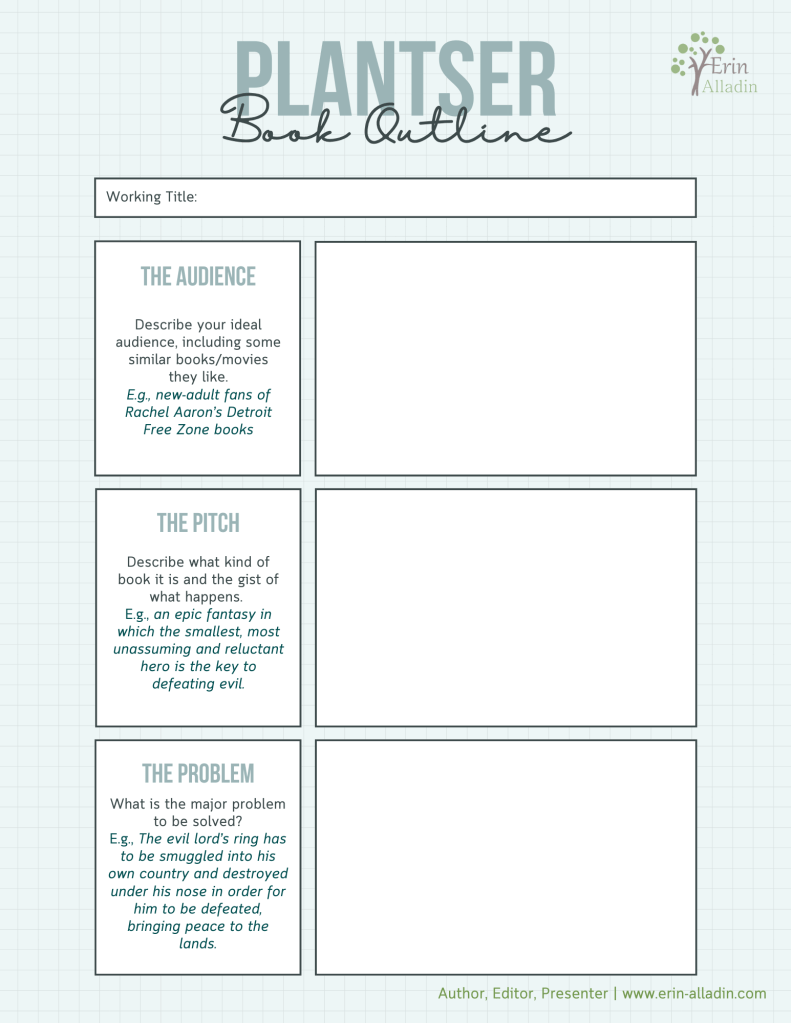
This is a controversial question. Many authors are “pantsers”—that is, they fly by the seat of their pants as they write, finding out what happens as they go. Others are planners: they write a detailed outline first to guide their draft. If you’re a pantser who is feeling uncertain about the merit of your idea, I suggest taking a stab at being a “plantser”: write a rough outline that will give you the general gist of your book. Make sure it has a cohesive beginning, middle, and end. Think about what’s going to drive your protagonist through all the action, and what will finally bring them resolution in the end. Ask yourself what themes might show up throughout the book and think about what kind of events might support them.
Plantser Outline
Want a free PDF guide to help you through the essential points of outlining as a plantser?
If you lose faith in your idea after exploring all these questions, it may not have been strong enough in the first place. But your time hasn’t been wasted! You can always use this experience as a springboard for your next great idea.

 Erin Alladin
Leave a comment