

Rhyme has been used in children’s books since their earliest evolution from oral nursery rhymes. There have been bestselling rhyming books in every decade—and yet, it’s not uncommon to hear that publishers today don’t want to receive rhyming manuscripts at all. Where does this disconnect come from?
The truth is that in today’s publishing landscape, rhyme is usually reserved for specific kinds of picture books. And what’s more, it’s difficult to get right. Out of hundreds of rhyming manuscripts I’ve reviewed in my time, only a handful displayed both the skill and substance needed to become a published book. But when they shine, they really shine—so let’s dig into your burning questions about rhyming picture books.
Should Picture Books Rhyme?
Rhyme is a great choice for your picture book if the following are true:

- Your target audience is 0–3, 2–5, or sometimes 4–7.
- Your manuscript is about a straightforward concept or has a simple narrative without too many elements to keep track of.
- The final book will be 24 pages, or at most 32.
- You are able to consistently use perfect rhyme and meter.
- Language play is integral to the text.
- The book would lose something important if you retold it in prose.
Rhyme is usually not suitable for your picture book in the following circumstances:
- Your target audience is older than kindergarten (unless you have a really special inspiration-themed text that might just be, for example, this generation’s go-to graduation gift).
- You find that events in the story are being controlled by the need to find words that rhyme and scan, to the point that the reader can tell that’s what’s happening.
- You’re telling a complicated story.
- You can’t tell the story briefly enough; you would need to use more than one stanza per spread to fit it in a standard picture book format.
- You can tell the same story in prose without losing anything.
- When you ask other people to read it out loud, the meter comes out wrong.
What kinds of picture books should rhyme?
I spent several days analyzing the most popular picture books of the twenty-first century and found that most of them fall into one of the following categories:
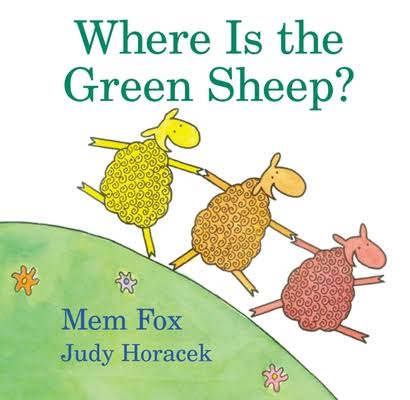
- They have a concept to teach babies or toddlers (like colours and opposites in Where is the Green Sheep?) and they are simultaneously supporting little ones’ language-learning through delightful, musical text.
- They offer hysterical fun while exploring the limits of a formula, as with the ever-building list of attributes in The Wonky Donkey.
- The rhyme and rhythm are used to soothe readers into settling down for bed, as in Goodnight, Goodnight, Construction Site.
- Few contemporary rhyming picture books target kids past kindergarten as their primary audience. Those that do tend to have some inspiration or a life lesson to impart, and the features of rhyme and repetition make it more memorable, as in The Magical Yet.
Why is Rhyming Good in Children’s Books?
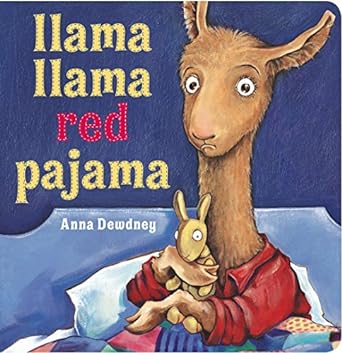
Even though rhyme isn’t suitable for every kind of picture book, it’s important for it to be present in some of them. After all, rhyming is wonderful for kids’ language development. It helps with phonemic awareness, improving their skill at hearing and identifying the smallest units of sound in a spoken word, and manipulating them.
Think about all the “-ama” rhymes in Llama Llama Red Pajama, and how a child might find themselves running through them in their mind after hearing the book. “Llama, pajama, Mama, drama…” Now they’re wondering how many other words might end the same way!
Rhyme and rhythm also aid memory and recall. Although you may have heard some stick-in-the-mud relatives complain, “That’s not reading!” when a young child memorizes and recites a book, it’s a key step in the journey to literacy, helping the youngest readers establish one-to-one matching as they see the words on the page that they’re reciting aloud. And if they notice the similar endings of rhyming words as they touch them while reciting, they’ve taken an even bigger step. Best of all, they are learning that reading is enjoyable!
How Long Should a Rhyming Picture Book Be?
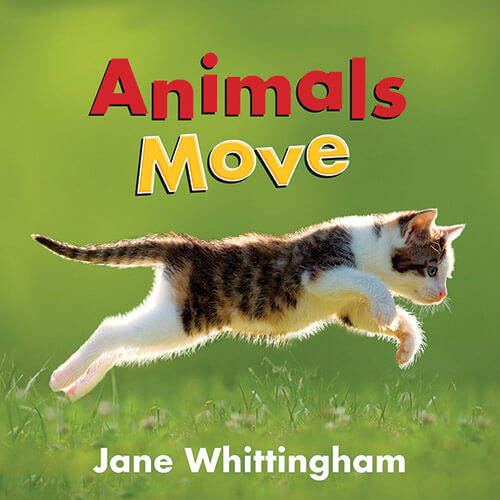
It’s common for rhyming picture books to have a shorter word count than books that use prose, averaging about 200–400 words if they have one stanza per spread. However, texts can be even briefer when each spread has only one line of text. Animals Move by Jane Whittingham is just thirty-four words in its original hardcover edition and twenty-six in the shorter board book.
Brevity is an asset for the youngest audiences. On the other hand, books that build on a formula like The Wonky Donkey or any book in the tradition of “The House that Jack Built” will become much wordier as they progress.
How Should You Format a Rhyming Manuscript?
As with any manuscript, use a clear, readable font like Times New Roman or Arial, size 11 or 12. Include your name, your contact information, the title of your book, and the text’s word count.
Display your text in stanzas just like a book of poetry would. My personal preference as an editor is not to double-space lines of poetry, but others might feel differently. Always read the submission guidelines of any company or agency you’re submitting to.
Here’s an excerpt from the manuscript of Listen Up! Train Song:
Where do the trains go?
There and back.
Let’s sing a train song
All down the track.

How does the horn sing?
Whoooooo!
Choooooo!
Let’s sing a horn song
All down the track.
If it’s important to you to suggest a pagination for the book—if, for example, placing page turns at certain points makes a significant difference to how the text is experienced—you can include those. Just be aware that the editor and/or art director will make the final decision about pagination.
[4–5]

Where do the trains go?
There and back.
Let’s sing a train song
All down the track.

[6–7]

How does the horn sing?
Whoooooo!
Choooooo!
Let’s sing a horn song
All down the track.
How Do You Write a Good Rhyming Book?
Rhyme and rhythm are skills that some people develop naturally, but anyone can get better at them with effort and attention. Focus on the following areas as you write:
Use perfect rhyme.

In English, all words have one syllable that is stressed more than any other. For a perfect rhyme, two words need to sound the same from that most-stressed syllable all the way to the end. That’s why GARburator and reFRIGerator don’t rhyme, even though they both end in “rator”, and why GARburator and CARburetor do.
Use consistent meter.
When thinking about meter, you can consider any syllable either stressed or unstressed:
Get UP! Get UP! It’s TIME to GO.
We’ll FLY on a Unicorn Over the SNOW.
English majors will be familiar with the study of scansion, which breaks down the use of these stressed and unstressed syllables in depth, but we don’t have to get that complicated about it. Just remember that you need the same number of stresses in every line (or sometimes every other line) throughout, like a steady beat in music. The above lines have very different syllable counts, but they both have four stresses—four beats. Clap them out as you speak the lines aloud and you’ll feel the steadiness of the rhythm. Because of that, these two lines work together seamlessly.
Make every word count.
Examine your text over and over to make sure you don’t have any filler words that aren’t pulling their weight. If you find yourself ending a line with a phrase like “…as can be” in order to get that easy “ee” rhyme, force yourself to go back and look for another solution that really puts those syllables to work.
Avoid anachronistic metrical crutches.
The way you use language needs to be contemporary, familiar, and even exciting. That means avoiding old-fashioned cheats to get the right number of syllables:
When the sun began to climb,
Then the morning bells did chime.
“Did” before a verb is so eighteenth century. Challenge yourself to rework the line into something more modern.
The kids were climbing o’er the wall
To play a game of basketball.
“O’er” just doesn’t belong to the same time period as basketball. Try some new options until you find something that really works.
Get test readers to read your text to you aloud.
This couplet might sound right in your head if you’ve been staring at it all morning:
And in the end we saw once more
Her umbrella beside the door.
But in order to make it work, your brain will be saying, “her UM-brell-A.” A fresh reader will naturally say, “her um-BRELL-a,” which throws off your meter. It’s your responsibility as the poet to come up with lines that readers will automatically “get right” the first time they read them. Test readers help you identify what that natural first reading will sound like.
Fortunately, it’s often easy to fix a problem like this by moving or adding a stressed syllable to the right spot:
And IN the END we SAW once MORE
Her RED umBRELLa beSIDE the DOOR.
Want rhyme and meter coaching in a handy PDF download?

Download my Rhyme Guide: Your Pocket Poetry Friend to get a useful, compact set of tools and checklists to help you execute perfect rhyme and meter every time.
Include a strong hook.

Don’t expect rhyme to be the main selling point of your manuscript. Just like any other picture book, it needs to have content that is in demand by its target market. Examples include bedtime books (usually with a specific theme or twist), books perfect for a particular gift-giving occasion, books that feature an underrepresented community, and books that highlight a developmentally appropriate concept.
Great Rhyming Books for Preschoolers and Kindergarteners
I’d like to leave you with a plug for a mostly-rhyming series I’ve had the pleasure of working on both as an author (under my pen name, Victoria Allenby) and as an editor, working with talented author-librarian Jane Whittingham. The Big, Little Concept Books are what I like to call “layered” concept books, stacking more than one concept together in order to pair subjects little ones LOVE—like construction trucks and baby animals—with developmental skills they need to learn, like basic shapes and movement words.

Road roller
Road roller
Coming through!
I spy a circle—
How about you?
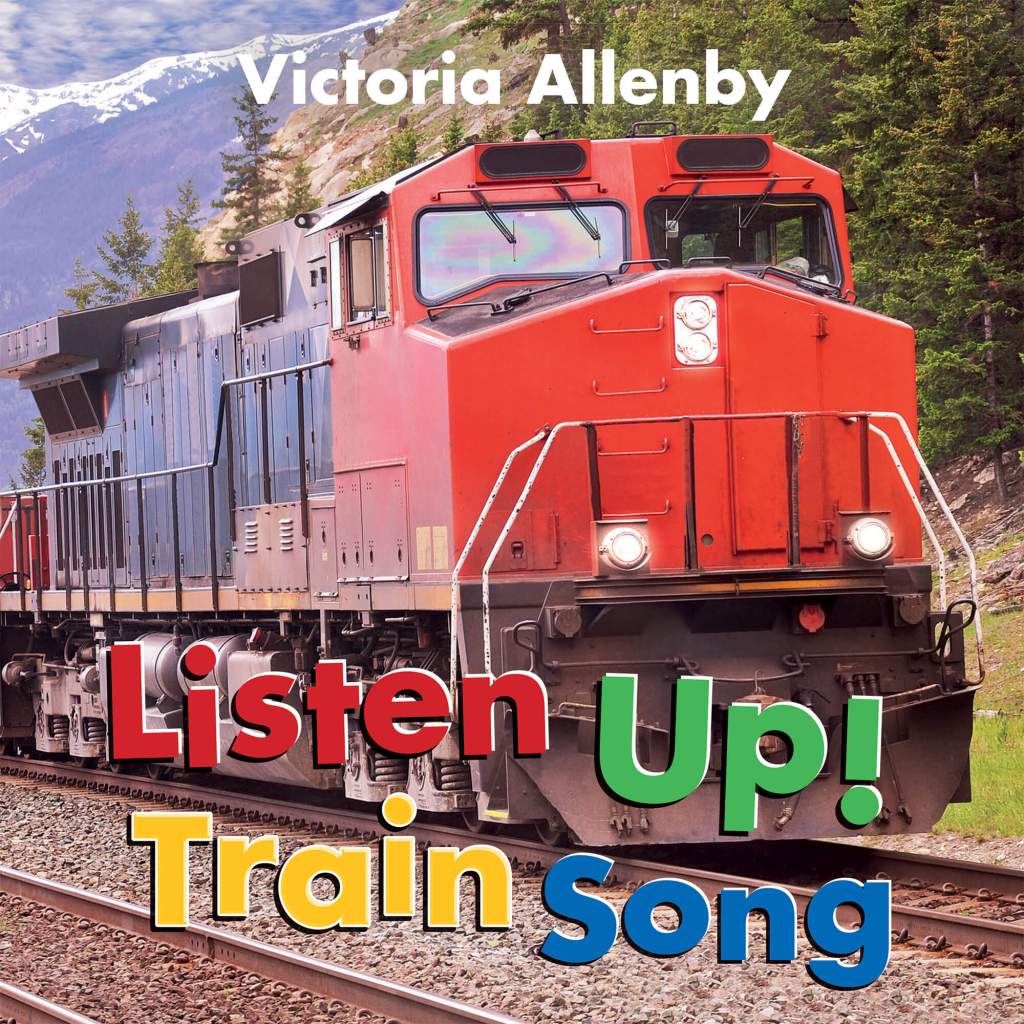
Where do the trains go?
There and back.
Let’s sing a train song
All down the track.

Look up high!
Jet planes fly.
How? Where?
Look up there!
The jet plane soars across the sky.
Calves swim,
Hatchlings bounce,
Porcupettes nibble,
Kittens pounce.
These books, along with several others in the series, are published by Pajama Press and are available either in board book or in padded hardcover with tear-resistant pages and rounded corners.
Happy rhyming!

 Erin Alladin
Leave a comment