

Many aspiring authors have trouble determining exactly which category of juvenile fiction their book falls into. It has chapters, so is it a chapter book? Middle grade? Are those the same thing? What about these new “upper” and “lower” middle grade labels?
Like many things, the vocabulary describing fiction categories for kids has evolved over time, meaning it isn’t always logical and straightforward. Kids go through huge developmental leaps between learning to read and moving on to YA literature, so new sub-categories of juvenile fiction keep emerging to help them and their grown-ups find the right books for every stage. We can keep better track of these sub-categories by breaking them into two main groups: simple chapter books for emerging readers, and more complex middle grade novels for independent readers.

You won’t yet find lower and upper middle grade sections in every bookstore or on every publisher’s website, but their adoption is getting more widespread all the time, so it’s worth having a good understanding of them. Let’s look at the specific hallmarks of each subcategory.
Jump to:
What is an Early Reader?
Age of the reader: 4–6 or 5–8 | Age of the Protagonist: Varied | Word Count: Maximum 1,500

Early readers are created for kids who are just beginning to read independently. Their language is usually simpler than that in picture books, which tend to be written for adults to read to children. Early readers, in contrast, should make it possible for a child at the right reading level to decode the text on their own, or with minimal help, even at first viewing. Because they serve this very specific function, these readers tend to be written in accordance with a framework published by companies like Lexile or Fountas & Pinnell and use controlled vocabulary. They may be levelled or graded so that parents or educators can choose exactly the right book to suit a child’s level.
Subjects within early readers can vary wildly, from brief biographies of historic figures to silly stories in rhyme or prose. They may be standalone books or series. Most are broken into brief chapters, with full-colour illustrations throughout.
“Early reader” is just one name among many for this type of transitional chapter book. School Library Journal has published an excellent piece on the many names and trends that these books are experiencing these days.
Examples of early readers include:
- The Elephant and Piggie books by Mo Willems
- The Narwhal and Jelly books by Ben Clanton
- HarperCollins’ I Can Read! levelled readers
- Scholastic’s Branches collections
- Penguin Random House’s Step into Reading levelled readers
What is an Early Chapter Book?
Age of the reader: 6–9 | Age of the protagonist: 7–10, with exceptions | Word Count: 4,000–10,000

These books, which are sometimes called juvenile or junior novels, exist as a bridge between illustration-heavy early readers and word-heavy novels. They have fairly large text with widely spaced lines, and illustrations appear on nearly every page, usually in full colour. The characters tend to face problems that can be solved within a day, commonly on friendship-related themes. Humour is often a strong element, and chapters are short and rewarding for beginning readers.
Interestingly, while protagonists may be about 7–10, since kids like to “read up” (that is, read about characters just a little older than themselves), the protagonist’s age can also be ambiguous, or they may be an adult, or possess adult abilities and responsibilities. Possibly this is because readers this age still identify strongly with the adults in their lives; it’s also worth considering that kids aged 7–10 don’t have a lot of agency, which limits the type of stories that can be told about them.
Examples of early chapter books include:
- The Jada Jones books by Kelly Starling Lyons
- The Princess in Black books by Shannon Hale and Dean Hale
- The Rainbow Magic Fairies books by Daisy Meadows, illus. Georgie Ripper
- The Junie B. Jones books by Barbara Park
- The Mia Mayhem books by Kara West
- The Questioneers books by Andrea Beatty, illus. David Roberts
- The Ivy + Bean books by Annie Barrows, illus. Sophie Blackall
What is Lower Middle Grade?
Age of the reader: 7–10 | Age of the protagonist: 8–11 | Word Count: 15,000–30,000

This emerging category bridges the gap between very juvenile early chapter books and much longer, wordier middle grade novels. In the last decade, most books created explicitly for this audience have been graphic novels, but more typical novels for this age group are beginning to appear as well.
Since the protagonist is still quite young, the solution to the book’s main problem often involves a strong component of support from friends and family. Illustrations are common, but they may be limited to one or two per chapter.
Bookstores don’t typically have a section dedicated to this age group, so plenty of lower middle grade books end up among early chapter books for ages 6–9 or among the standard middle-grade selections for ages 8–12 or 9–12. However, some publishers are beginning to identify specific books for ages 7–10, including:
- Slug Days, Penguin Days, and Duck Days by Sara Leach, illus. Rebecca Bender
- Ways to Make Sunshine by Rennée Watson, illus. Nina Mata
- The Ada Lace Adventures by Emily Calandrelli
- The Spiderwick Chronicles by Toni DiTerlizzi and Holly Black
- The Geronimo Stilton books
What is Middle Grade?
Age of the reader: 8–12 | Age of the protagonist: 10–14 | Word count: 30,000–50,000
This is classic middle grade, the heart of the category from which the other designations have splintered off. That’s why you’ll find that books from past decades are much less rigid about word count or protagonist age. As the sub-categories have solidified, so have the “rules” that make them distinct from one another.
Kids who are ready for middle grade books may be anywhere from age 8 to age 12. Many of them are perfectly capable of reading books for much older readers, and, indeed, middle grade books are complex and sophisticated in their own right. But their themes and subjects match the emotional maturity and interests of their audience, tending, for example, toward social justice-oriented storylines with hopeful endings. In cases where the themes are particularly heavy, or where violence is featured, they are usually marketed for ages 9–12.
Middle grade novels tend to range from 30,000 to 50,000 words, although proven authors in the science-fiction and fantasy genres can get away with more. Illustrations are sometimes included, but sparingly.
Examples of middle grade novels include:
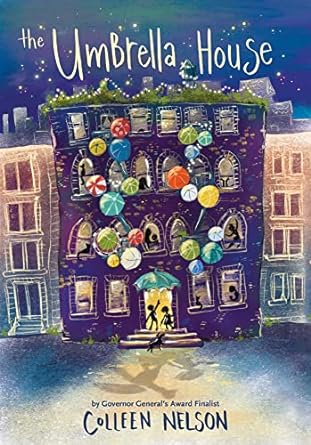
- The Umbrella House by Colleen Nelson
- The Keeper of The Lost Cities series by Shannon Messenger
- The Supernatural Investigations books by B. B. Alston
- Odder by Katherine Applegate, illus. Charles Santoso
- Other Words for Home by Jasmine Warga
- OCDaniel by Wesley King
What is Upper Middle Grade?
Audience Age: 10–14 | Protagonist Age: 12+ | Word Count: 45,000–65,000

Upper middle grade is suitable for kids who are ready to read more complex, often weightier stories, but aren’t yet interested in the typical preoccupations of young adult books. Upper MG books might contain violence, war, abuse, systemic injustice, racism, and the effects of vices like drinking, drug abuse, child marriage, and more. However, the young characters will not engage in drinking, drugs, or sexual behaviour.
I have seen widespread insistence that upper MG characters not be older than thirteen, so as to keep them out of high school, but I would argue that the age range is more flexible in non-real-world or non-school settings. I observed books for this age group emerging in the fantasy genre years before I encountered any in contemporary fiction, and characters could easily be fourteen or fifteen in those books.
Similarly, take any word count range for upper middle grade with a grain of salt, since the sub-category is new enough that no set standard has emerged. Your best bet is to check the submission guidelines of the publishers or agents you’re most interested in working with. As with most age groups, science fiction and fantasy can have longer word counts than other genres.
Examples of Upper Middle Grade novels:
- Dragonfly Song by Wendy Orr
- The Lockwood & Co. series by Jonathan Stroud
- Before the Ever After by Jacqueline Woodson
- Crashing in Love by Jennifer Richard Jacobson
- Fish in a Tree by Lynda Mullaly Hunt
- The His Dark Materials trilogy by Philip Pullman
If you want to dive deeper into what distinguishes middle grade from YA, check out this post.
And for more insights into the nuances of writing and editing, subscribe to my twice-monthly newsletter.
Happy writing!
Erin

 Erin Alladin
Leave a comment